More neurons, less Alzheimer’s: from zebrafish to mammals

A molecular mechanism that zebrafish brain uses to regenerate neurons after neurodegeneration can help us to cope with Alzheimer's, our recent study shows. Induced neurogenesis could be a therapy option for ameliorating Alzheimer's disease pathology. Our recent publication in Nature Partner Journal Regenerative Medicine addresses whether we can use neurogenesis as a means to counteract …

Zebrafish is not far from humans when it comes to how the brain is affected by Alzheimer’s disease

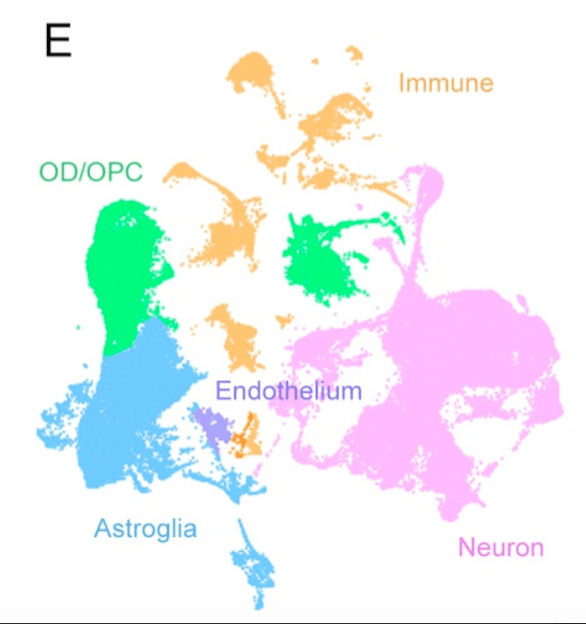
Our recent publication about comprehensive comparison of the single cell/nucleus transcriptomics profiles of human Alzheimer's brains and zebrafish Alzheimer's model is out. We found remarkable similarities and biologically meaningful differences. To compare transcriptomics data in zebrafish model of AD and Alzheimer's patients (in entorhinal cortex, superior frontal gyrus, dorsolateral prefrontal cortex), we first reliably integrated …

Our Alzheimer’s disease model in zebrafish is used for validating a drug that prevents loss of neuronal connections

A collaborative work led by Jared Sterneckert, and in which Kizil Lab was also involved, is now published in the journal Stem Cell Reports, the official journal of International Society for Stem Cell Research (ISSCR). This study identified a lead compound that inhibits CDK5 and GSK3ฮฒ, and is neuroprotective in vitro and in vivo. Prabesh …

We generated a novel method for reconstructing neuronal networks of human brain and modeling Alzheimer’s disease in 3D.

We are glad to announce our first ever pre-print server publication that documents an innovative 3D system allowing human neural stem cells to produce our brain's various neuronal types and to model Alzheimer's disease with major pathological outcomes replicated outside the brain in a 3D space. With this model, we can study the effects of …