New Insights into Vertebrate Cajal-Retzius Cells

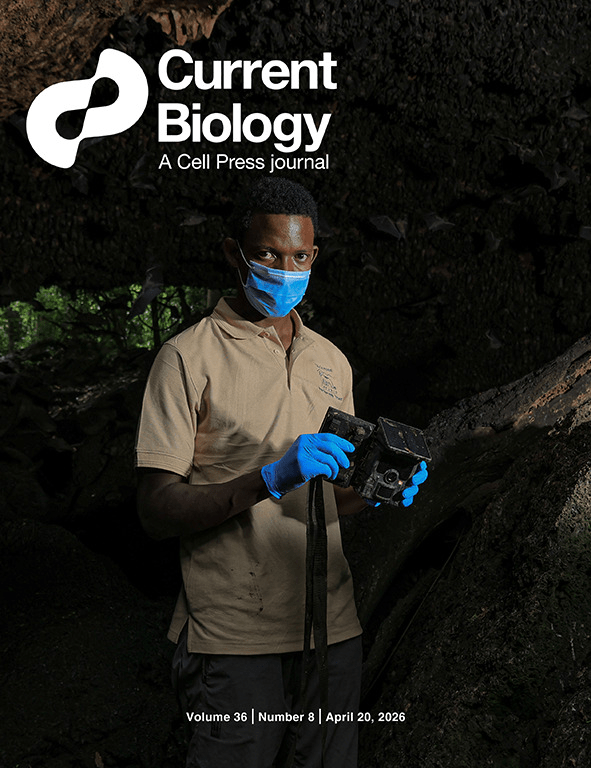
We are excited to share a new study, “Evolutionary origins and transcriptomic innovations of vertebrate Cajal–Retzius cells”, led by Dr. Maria Antonietta Tosches and her lab, now published in Current Biology. This work takes a comparative, cross-species approach to address a long-standing question in neuroscience: are Cajal–Retzius (CR) cells a mammalian innovation, or do they …

Our student Rania Awad Receives Grand Award at Terra NYC STEM Fair

Huge congratulations to our outstanding student, Rania Awad! We are incredibly proud of her remarkable achievement and the dedication she has shown to her training. Her hard work, curiosity, and passion for science shine through in this accomplishment. On March 21st, high school senior Rania Awad competed at the final round of the Terra NYC …

We’re joining ZDM18!

The Kizil Lab will participate in the 18th International Zebrafish Disease Models (ZDM18) Conference with two talks this year! Join us in Boston from October 13–15, 2025, where we will share our latest work on zebrafish disease models and our interesting findings. We look forward to connecting with the zebrafish research community there! https://www.zdmsociety.org/zdm18-agenda

New Paper Published: Shared Genetic Architecture Between Early-Onset Alzheimer’s and Lipid Traits

We are pleased to highlight a recent publication by Ray et al. (2025) that investigates local genetic covariance between early-onset Alzheimer’s disease (EOAD) and blood lipid traits. We in the Kizil Lab are proud to have contributed to this collaboration, which deepens our understanding of how lipid biology intersects with neurodegenerative risk. 👉 Read the …

New Preprint

Our collaborators - Tosches Lab - have just published a fascinating study: “The evolutionary origins of Cajal–Retzius cells”. We in the Kizil Lab were honored to contribute to this work, which maps Tp73⁺ neurons across vertebrates (chicken, salamander, zebrafish, skate) and reveals that Cajal–Retzius (CR) cells likely emerged from an ancient Tp73⁺ lineage associated with …

Our preprint about new insights from human brains into APOE‑ε4 in vascular pathology and Alzheimer’s disease risk is out

We are happy to announce a new preprint from the Kizil Lab, led by first author Elanur Yilmaz, titled “Single‑nucleus multiomics in brains from Hispanic individuals reveal APOE‑ε4‑driven disruption of focal adhesion signaling in the presence of cerebrovascular pathology.” In this study, our team analyzed 413,175 single nuclei from 52 postmortem brains with high cerebrovascular …

New preprint investigating the pathology mechanisms of Fibronectin at the blood-brain barrier is out

We are excited to share a new preprint from the Kizil Lab titled "APOE‑ε4‑induced Fibronectin at the blood‑brain barrier is a conserved pathological mediator of disrupted astrocyte–endothelia interaction in Alzheimer’s disease." In this study, we uncover a previously unknown mechanism by which the APOE‑ε4 allele—one of the strongest genetic risk factors for Alzheimer’s disease—disrupts brain …

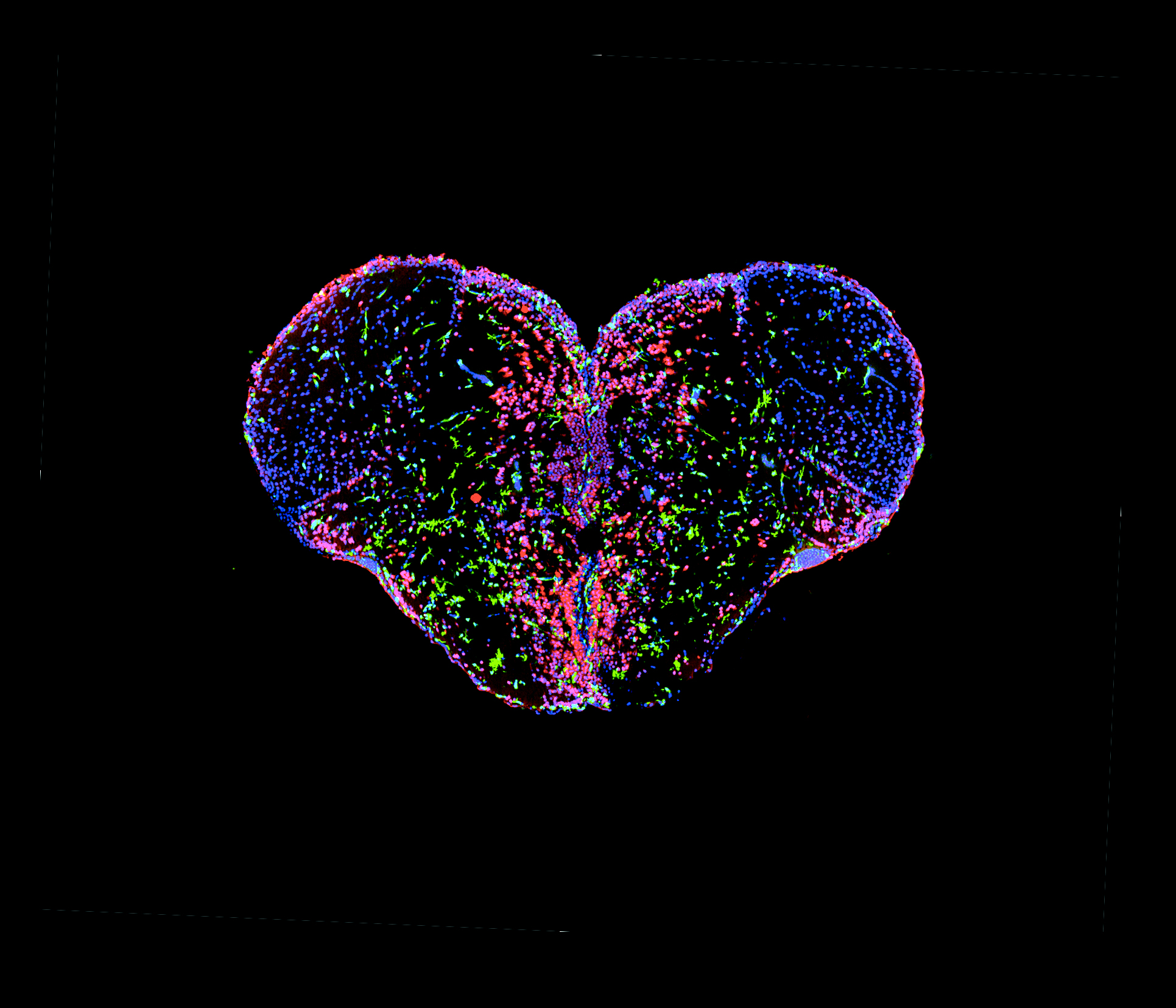
Decoding the Heart’s “Little Brain”

We’re proud to share our groundbreaking study published in Nature Communications. Our work sheds light on the zebrafish intracardiac nervous system (IcNS)—a local neural network acting as the heart’s "little brain." This was a fantastic collaborative effort between teams at Karolinska Institute and Columbia University, spearheaded by the Konstantinos Ampatzis Lab and Kizil Lab. Huge …

Our publication received the McAlpine Foundation for Neuroscience Research Award

We are proud to announce that our recent publication where we identified a protective genetic variant in FN1 gene against Alzheimer's disease received a recognition award from McAlpine Foundation as one of the best publications in 2024. http://www.mcalpinefoundation.org/awards.php In recognition of the Vardarajan, Kizil, and Mayeux labs' innovative cross-species approach to uncover protective mechanisms against …