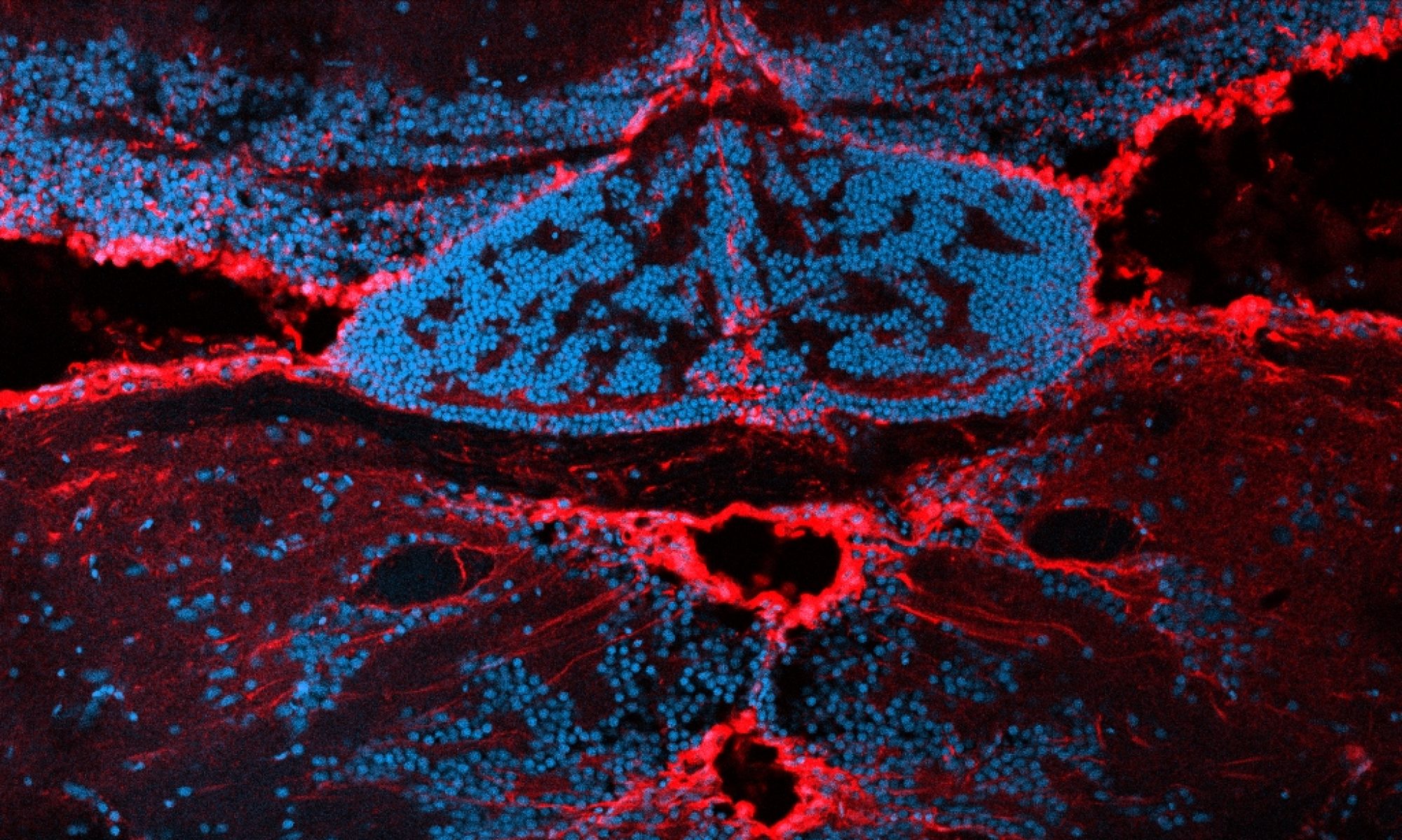
We are happy to announce a new preprint from the Kizil Lab, led by first author Elanur Yilmaz, titled โSingleโnucleus multiomics in brains from Hispanic individuals reveal APOEโฮต4โdriven disruption of focal adhesion signaling in the presence of cerebrovascular pathology.โ In this study, our team analyzed 413,175 single nuclei from 52 postmortem brains with high cerebrovascular …
New preprint investigating the pathology mechanisms of Fibronectin at the blood-brain barrier is out
We are excited to share a new preprint from the Kizil Lab titled "APOEโฮต4โinduced Fibronectin at the bloodโbrain barrier is a conserved pathological mediator of disrupted astrocyteโendothelia interaction in Alzheimerโs disease." In this study, we uncover a previously unknown mechanism by which the APOEโฮต4 alleleโone of the strongest genetic risk factors for Alzheimerโs diseaseโdisrupts brain …
Collaborative Study on Molecular Insights into Blood-Brain Barrier Dysfunction in Alzheimer’s Disease Published
We are thrilled to announce our participation in a groundbreaking study in collaboration with Mayo Clinic, now published in Nature Communications. This research looks into the intricate role of blood-brain barrier disruptions in Alzheimerโs disease, leveraging the remarkable capabilities of zebrafish models in combination with vast antemortem and postmortem human brain datasets. The blood-brain barrier …
We found a genetic variant that protects against Alzheimerโs disease
We discovered a genetic variant that reduces the odds of developing Alzheimerโs disease by up to 70% and may be protecting hundreds of thousands of people from the disease. The discovery of the protective variant, which appears to allow toxic forms of amyloid out of the brain and through theโฏblood-brain barrier, supports emerging evidence that …
Continue reading "We found a genetic variant that protects against Alzheimerโs disease"
Our collaborative study identified a protective genetic variant in humans that protects against Alzheimer’s disease
We are glad to announce another preprint from our lab. We have discovered rare genetic variations in a gene associated with the extracellular matrix (ECM) that might protect against Alzheimerโs disease for those at higher genetic risk, specifically individuals carrying the APOEe4 allele. The study used whole genome sequencing data from different cohorts to isolate …
First preprint research article from Kizil Lab in 2024 out
We are glad to share our first bioRxiv preprint in 2024. Alzheimer's disease is characterized by cognitive decline and memory loss, and genetic variations in humans are key to understanding it. Our study focused on the ABCA7 gene, which is linked to Alzheimer's risk. We used CRISPR/Cas9 gene editing to create zebrafish with a genetic …
Continue reading "First preprint research article from Kizil Lab in 2024 out"
More neurons, less Alzheimer’s: from zebrafish to mammals
A molecular mechanism that zebrafish brain uses to regenerate neurons after neurodegeneration can help us to cope with Alzheimer's, our recent study shows. Induced neurogenesis could be a therapy option for ameliorating Alzheimer's disease pathology. Our recent publication in Nature Partner Journal Regenerative Medicine addresses whether we can use neurogenesis as a means to counteract …
Continue reading "More neurons, less Alzheimer’s: from zebrafish to mammals"
Our collaborative publication on a new epitranscriptomic regulation of Tau pathology published
Using cellular and animal models of Alzheimer's disease as well as human brains from clinical cohorts, Santa-Maria Lab's study identified that the RNA-modifying enzyme NOP2/Sun RNA methyltransferase 2 (NSun2) exerted an epitranscriptomic regulation of miR-125b and tau phosphorylation in Alzheimer's disease. This study highlights a novel avenue for therapeutic targeting. We are glad to have …
Missing Link Between Alzheimerโs and Vascular Disease Found?
Meeri Kim's article in the Columbia University Irving Medical Center Newsroom on our recent collaborative study with Dr. Annie Lee, Dr. Badri Vardarajan and Dr. Richard Mayeux. For more than 20 years, scientists have known that people with hypertension, diabetes, high cholesterol, or obesity have a higher likelihood of developing Alzheimerโs disease. The conditions can …
Continue reading "Missing Link Between Alzheimerโs and Vascular Disease Found?"
Collaborative publication in Science Advances
We are glad to be part of this amazing story published today in Science Advances, where functional ramifications of sequential neurogenesis in zebrafish habenula was published by Emre Yaksi Lab in NTNU, Norway. Congrats to all authors! https://advances.sciencemag.org/content/6/36/eaaz3173