First preprint research article from Kizil Lab in 2024 out

We are glad to share our first bioRxiv preprint in 2024. Alzheimer's disease is characterized by cognitive decline and memory loss, and genetic variations in humans are key to understanding it. Our study focused on the ABCA7 gene, which is linked to Alzheimer's risk. We used CRISPR/Cas9 gene editing to create zebrafish with a genetic …

More neurons, less Alzheimer’s: from zebrafish to mammals

A molecular mechanism that zebrafish brain uses to regenerate neurons after neurodegeneration can help us to cope with Alzheimer's, our recent study shows. Induced neurogenesis could be a therapy option for ameliorating Alzheimer's disease pathology. Our recent publication in Nature Partner Journal Regenerative Medicine addresses whether we can use neurogenesis as a means to counteract …

Kizil Lab moves to Columbia University!

We are happy to announce that we moved to New York to the Department of Neurology and the Taub Institute in Columbia University Irving Medical Center. We are thrilled to continue and expand on our work in zebrafish on Alzheimerโ€™s disease in the great New York City at this great university! Stay tuned!

Our Viewpoint on the use of zebrafish for Alzheimer’s disease is out in ACS Chemical Neuroscience

We are happy to announce our Viewpoint in ACS Chemical Neuroscience on how zebrafish can help us to understand Alzheimer's disease pathology as well as help design new drugs. Zebrafish as an Experimental and Preclinical Model for Alzheimerโ€™s Disease (click to open the publication at the publisher's site in a separate window) Journal cover from …

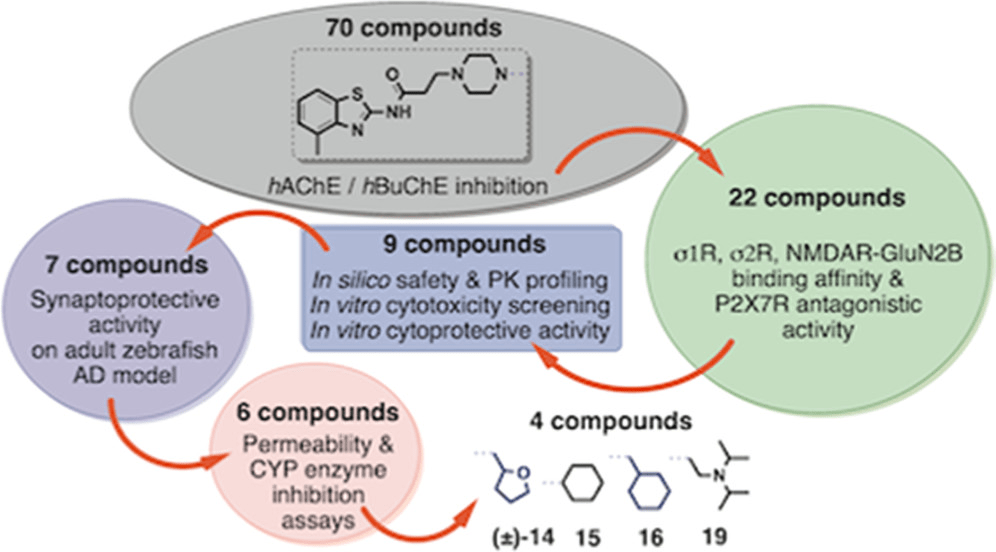
We discovered new potent multitarget lead compounds for synaptoprotection in Alzheimerโ€™s disease

Happy to announce our publication in Journal of Medicinal Chemistry: Discovery of Potent Cholinesterase Inhibition-Based Multi-Target-Directed Lead Compounds for Synaptoprotection in Alzheimerโ€™s Disease (click to open the link on the publisher's site) Graphical abstract Abstract: Drug development efforts that focused on single targets failed to provide effective treatment for Alzheimerโ€™s disease (AD). Therefore, we designed …

Zebrafish is not far from humans when it comes to how the brain is affected by Alzheimer’s disease

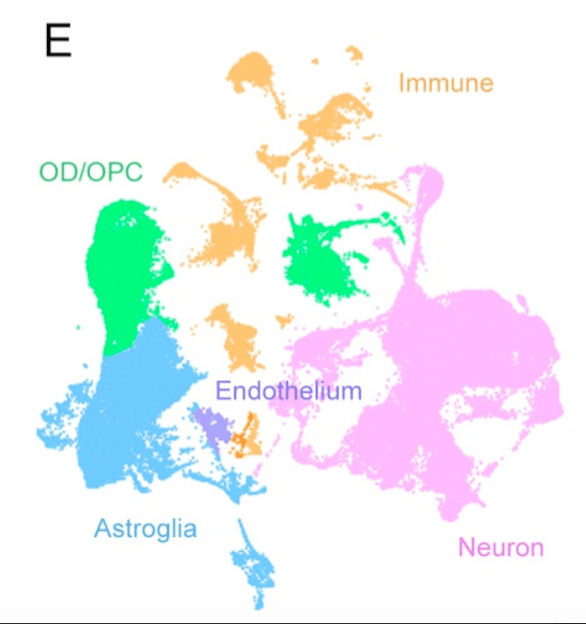
Our recent publication about comprehensive comparison of the single cell/nucleus transcriptomics profiles of human Alzheimer's brains and zebrafish Alzheimer's model is out. We found remarkable similarities and biologically meaningful differences. To compare transcriptomics data in zebrafish model of AD and Alzheimer's patients (in entorhinal cortex, superior frontal gyrus, dorsolateral prefrontal cortex), we first reliably integrated …