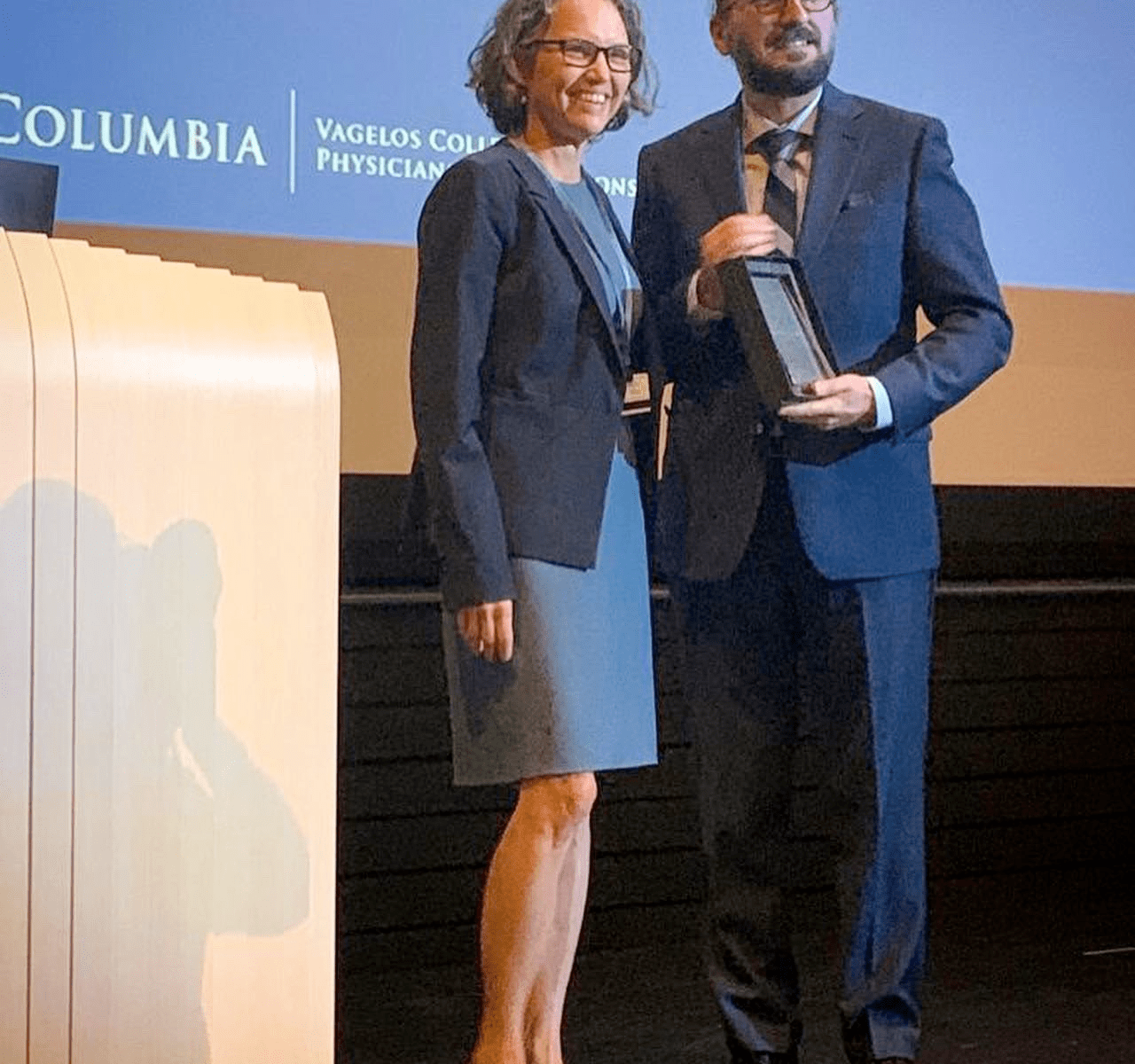
Truly honored for the Schaefer Award of the Columbia University Irving Medical Center, Vagelos College of Physicians and Surgeons. Thanks to the award committee for this recognition, to our collaborators, mentors and colleagues in Kizil Lab - excellent scientists, without whom the beautiful zebrafish science would not be possible. This goes most to them!
Zebrafish is not far from humans when it comes to how the brain is affected by Alzheimer’s disease
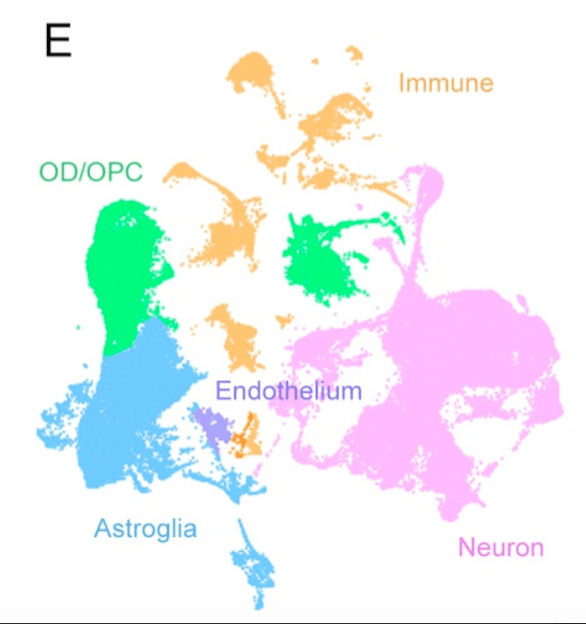
Our recent publication about comprehensive comparison of the single cell/nucleus transcriptomics profiles of human Alzheimer's brains and zebrafish Alzheimer's model is out. We found remarkable similarities and biologically meaningful differences. To compare transcriptomics data in zebrafish model of AD and Alzheimer's patients (in entorhinal cortex, superior frontal gyrus, dorsolateral prefrontal cortex), we first reliably integrated …
Missing Link Between Alzheimer’s and Vascular Disease Found?
Meeri Kim's article in the Columbia University Irving Medical Center Newsroom on our recent collaborative study with Dr. Annie Lee, Dr. Badri Vardarajan and Dr. Richard Mayeux. For more than 20 years, scientists have known that people with hypertension, diabetes, high cholesterol, or obesity have a higher likelihood of developing Alzheimer’s disease. The conditions can …
Continue reading "Missing Link Between Alzheimer’s and Vascular Disease Found?"
From zebrafish to humans: our work helped to find the missing link between Alzheimer’s and vascular disease
Our study published in Acta Neuropathologica identified an important link between #vascular disease and Alzheimer's in #humans. This publication is a great collaborative effort and included important contribution from zebrafish. FMNL2 regulates gliovascular interactions and is associated with vascular risk factors and cerebrovascular pathology in Alzheimer’s disease. (Click to be redirected to the publisher's site) …
Admixture Mapping of Alzheimer’s disease in Caribbean Hispanics identifies a new locus on 22q13.1
After years in the making, a beautiful publication about admixture mapping for Alzheimer’s disease in Hispanics is out from Giuseppe Tosto lab at Columbia University. Delighted that zebrafish can contribute to further understanding the human diseases, especially Alzheimer's disease.
See our Abcam Webinar on Neurodegenerative Diseases
The progressive, age related degeneration of the structure and function of proteins and cells in the nervous system can lead to issues involving memory and motor function loss. Join us to gain insights into recent advances in this field of neuroscience. https://go.myabcam.com/webinar-neurodegenerative-diseases-2021?_ga=2.122838339.99911988.1665094521-1263913016.1665094521
We identified a new signaling pathway that controls pathology-induced neural stem cell plasticity in zebrafish brain
We show a new signaling mechanism through Kynurenic acid and Aryl hydrocarbon receptor in regulating the proliferation of a specific subset of neural stem cells in adult #zebrafish model of #Alzheimer's disease. https://www.mdpi.com/2073-4409/10/10/2748
Locomotion dependent neuron-glia interactions control neurogenesis and regeneration in the adult zebrafish spinal cord
Happy to share our new paper on the non-neuronal / non-motor functions of the spinal locomotor network from Konstantinos Ampatzis Lab. We are glad to be collaborators and contributors to this study published in Nature Communications. https://www.nature.com/articles/s41467-021-25052-1
We received the Helmholtz President’s Initiative Funds – Helmholtz Validation funds for i3D-Markers
Smart Biomarkers to Empower Drug Development for Brain Diseases Press release from DZNE: Dresden Researchers Awarded Prestigious Funding by the Helmholtz Association to Validate a Novel Approach that Combines Neuroelectronics and Artificial Intelligence i3D-Markers project page:
Our studies featured in The Scientist
A nice article in The Scientist on the role and promises of adult neurogenesis in Alzheimer's disease. Thanks to Dr. Abby Olena for featuring our previous work in zebrafish and its relationship to decipher how to use adult neurogenesis to tackle Alzheimer's. Reduced Adult Neurogenesis Linked with Alzheimer’s Disease Neural progenitors in a human brain …